
Loudoun County Municipal Court Warrants
Loudoun County has no municipal criminal court of its own. Leesburg, Purcellville, Lovettsville, Round Hill, and Middleburg each sit inside the county, yet their adult criminal and traffic cases run through Virginia's district and circuit courts. Town police can still enforce local ordinances. So a paper marked municipal, or naming a town, may be a parking matter or a local citation rather than a warrant signed by a municipal judge. Before you search anything, read the heading and the return instructions. Then pull the issuing court and case number from the document. Those two details tell you which clerk to call and which docket to ask about, and they keep a routine town ticket from being mistaken for an active warrant.
Loudoun County Cities With Municipal Courts
The incorporated places in Loudoun County are towns, not cities. Ranked by the county's 2020 GIS population layer, the five largest are Leesburg, Purcellville, Lovettsville, Round Hill, and Middleburg. Leesburg, Purcellville, and Middleburg each run a town police department. Lovettsville and Round Hill depend on county and state coverage instead. None of these towns operates a separate municipal criminal court. A town department is the right call for a local incident or an ordinance question, but it is not the clerk who holds a criminal docket. County courts hear cases from town residents and from the surrounding county alike. If paperwork names a town, use that town's page to find its local agency. Then bring any court matter back to the county level and confirm it there.
Checking a Municipal Court Warrant
Begin with the paper itself. Copy down the exact title, the court, and the case number before you search anywhere. The Virginia Judiciary system covers many adult cases online, so run the case there first. Then call the Loudoun court named on the document to verify the latest entry, because the online case system is not a live statewide warrant list and may lag behind current enforcement. A local parking citation takes a different path. Use the town's ticket channel for that, not a criminal warrant lookup. If the heading names General District Court, Circuit Court, or JDR, follow that court's own records and access rules. A name-only search can pull up an unrelated person, so never treat it as final confirmation. Read the heading, issuing office, date, and docket number together. With no paper in hand, find the agency's official number on your own and ask which office keeps the record. A town address alone tells you nothing about the court or whether a warrant exists.
Middleburg Municipal Parking Is a Separate Record
Middleburg runs its own parking payment and appeal process. The form covers a town parking citation, not a criminal case and not a court-issued arrest warrant. Under the town code, ticket handling follows its own timing, including a seven-day appeal window and a distinct 45-day record status. Check the current notice and code for the deadline that applies to you. The Town of Middleburg parking payment and appeal page shows that separate ticket route. It holds no warrant data. Use it only for a Middleburg parking citation. Anything with a court date or docket number goes to the clerk named on that document.
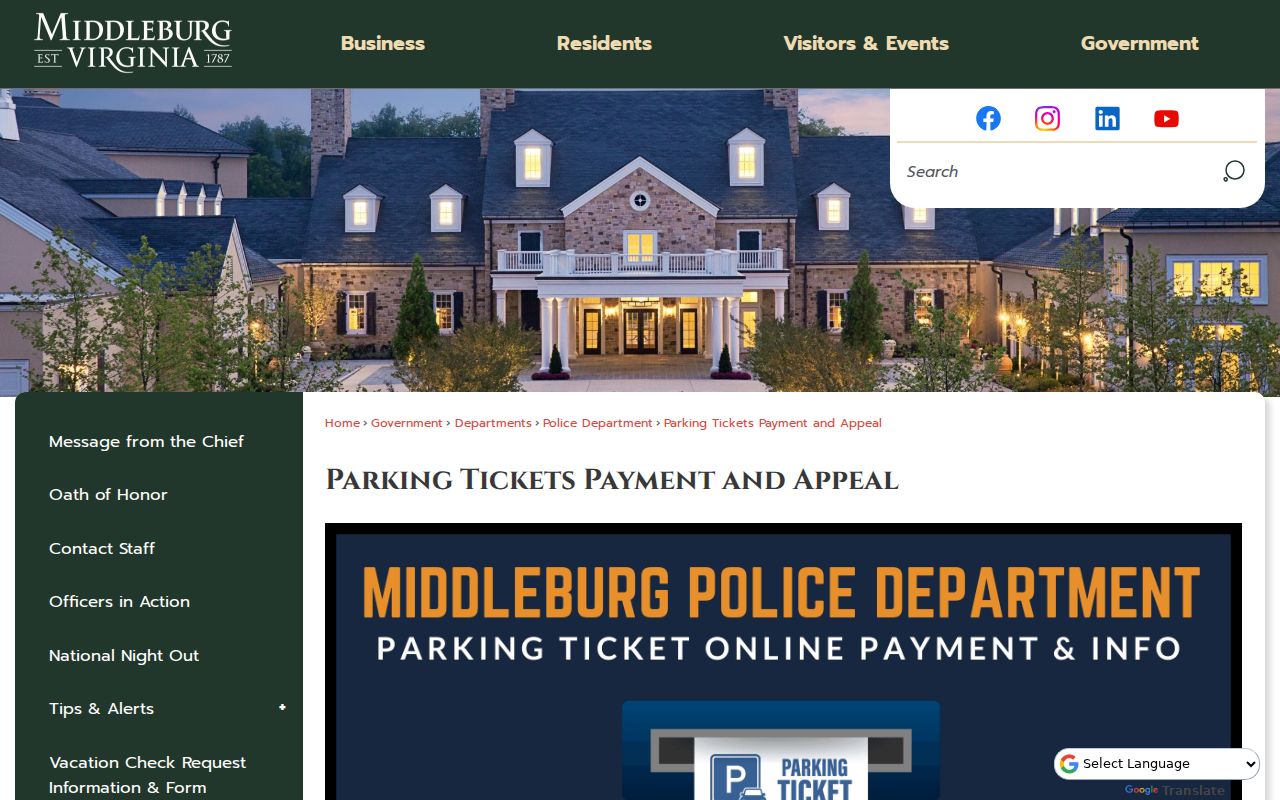
That official Middleburg page shows the town's ticket interface, not a Loudoun County court docket, and it does not search county warrants.
Inside a Municipal Court Warrant
A true court warrant names a court, a person, a case, and the type of process. In Loudoun, the court level tells you a lot. General District handles many adult traffic and misdemeanor cases. Circuit Court handles felonies. JDR handles juvenile and domestic matters, with access limits attached. Town citations look different. They often carry local ordinance labels and payment instructions, and they should not be read as a capias unless the document and the court say so. Before you act, ask the issuing office whether the record is a municipal ticket, an adult court case, or something a separate agency holds. That one question can save you a wasted trip or payment.
How to Resolve a Municipal Court Warrant
If the record really is a court warrant, call the issuing clerk and ask what the court requires. The answer may turn on whether a hearing, a payment, a motion, or a judge's order is involved. A clerk in Loudoun County can walk you through the docket process but cannot give legal strategy. For that, a Virginia attorney can advise on your individual case. A town parking citation is different. Follow the appeal or payment directions printed on the ticket, and keep proof of whatever step you complete. One caution: paying a municipal parking fee does not clear a separate traffic summons or capias. Ask the responsible office how it records completion, because a ticket receipt proves a transaction, not that a court process has been recalled.
Loudoun County Court Levels Replace a Municipal Criminal Docket
Loudoun County has no single municipal criminal docket. Adult traffic and misdemeanor cases go to Loudoun General District Court at 2 Church Street NE in Leesburg. Felony process belongs to Circuit Court at 18 East Market Street. Juvenile, support, and domestic matters sit with JDR at the East Market Street courthouse, and those records may not surface in an ordinary public search. Your summons or court order should name the right division. A town police office can explain a local incident. The court clerk keeps the judicial case record. If the return court is unclear, check the official Virginia Judiciary directory for the Loudoun County case before you travel.
Loudoun Municipal Warrants and Public Access Limits
Virginia FOIA opens many existing records to the public. Still, exclusions apply, agencies may recover costs, and a request must be reasonably specific. The law builds no warrant database. Nor does it make protected court information public. Juvenile records face legal restrictions, and search-warrant materials can be sealed temporarily. Aim each request at the office likely to hold the record. Loudoun County agencies and town offices may run separate request processes. A response deadline is not a promise of release, and FOIA should not replace a direct call to the court about a pending case.
Use Loudoun Town Police for Local Ordinance Questions
Leesburg, Purcellville, and Middleburg each run their own municipal police departments. Town officers can answer policing questions, point you to the right contact, and explain which agency handled an incident. Lovettsville and Round Hill rely on the Loudoun Sheriff's Office and state coverage instead. None of this creates a separate town criminal court. Give the department the location and date of a local event when you need help finding the responding agency. For a case number, hearing date, or capias, go to the court. The line between police jurisdiction and court record ownership matters here. A town inquiry is never a warrant confirmation, anywhere in Loudoun County.
Before a Loudoun Municipal Warrant Visit
Call ahead before any Loudoun County warrant visit. Confirm the destination, office hours, and building entry instructions, and ask whether the clerk expects an in-person appearance. Courts, police facilities, and town halls serve different purposes. Never assume an office has a public warrant surrender or bond window. Ask what it can accept before you leave. Reserve 911 for emergencies. For routine court process, contact the clerk named on the summons or the official court page. If someone demands immediate payment to prevent arrest, hang up and call the court yourself at its published number.